01 /
Buy more good attempts.
Your first board has one important job: help you catch enough suitable waves to learn. A beautiful board that keeps you paddling behind every wave is an expensive way to practice frustration. Choose for the surfer you are today, the waves you can safely surf, and the number of useful repetitions you can get.
For most adults starting from scratch, that means a generously sized, stable softboard with a broad outline, enough length to paddle comfortably, and fins suitable for learning. Rent one in a lesson first if you can. A coach who has watched your paddling, pop-up and board control has information no online chart can see.
There is no graduation ceremony where you must abandon a big board. Longboarding, logging and riding midlengths are complete ways to surf. A good learning board can remain your small-day board, your family board, or simply your favorite way to catch a lot of waves.
Use the surfboard size calculator to build a shortlist, then bring that shortlist to a lesson, rental counter or knowledgeable surf shop. This guide explains what to do with the numbers.
02 /
Why a foam board makes so much sense.
A soft outer surface is forgiving when you fall, collide with your own board or mishandle it on the way to the beach. It is also less distressing to learn on something built for routine knocks than to put a fresh ding in a new fiberglass board. That matters: less fear of damaging your equipment leaves more attention for learning.
Softer does not mean harmless or indestructible. A large board still has mass, and its nose, leash and fins can injure you or someone else. Learn to maintain control, leave generous space and avoid throwing the board away. Practice away from crowded takeoff zones, with instruction appropriate to your ability.
Check the fins, not just the deck.
Some learner boards have flexible fins. Others use rigid performance fins or a rigid core with softer edges. A foam deck does not guarantee soft fins. Ask the seller exactly what is fitted, how it attaches and whether a learner-friendly alternative is approved for that board. Catch Surf, for example, offers a safety-edge fin with a rigid inner structure and softer perimeter; that is a different construction from an entirely flexible fin.[1]
Softboards vary enormously.
A tiny, fast soft-top ridden by an expert is not the same product as a long, broad surf-school board. Compare length, width, outline, volume and intended rider level. The word “foamie” alone tells you very little about whether you can learn on it.
Follow that board’s care instructions. Avoid prolonged heat and hot cars, rinse and dry it, and do not crush it with roof straps. Softboards can absorb water or suffer damage too; construction and repair methods differ.[2] Do not assume a household glue or solvent is compatible with its foam.
03 /
Bigger usually helps. Shape decides how.
Extra usable length and width give a new surfer a more generous platform for paddling, getting to their feet and finding balance. More volume generally gives more flotation for a given rider. These benefits overlap, but they are not interchangeable.
Imagine two boards with the same liters: one long and broad, the other short and thick. The short board may float you adequately while giving you much less room for an imperfect pop-up, a shorter platform to balance on and a different paddling feel. Adding thickness to a performance outline does not turn it into a surf-school board.
- Length: affects the size of the platform and the way it paddles, trims and turns. Longer boards usually reward earlier, more deliberate positioning.
- Width: adds a broader base, especially through the area where you stand. Too much width for your reach can make paddling awkward.
- Thickness and liters: describe part of flotation and foam distribution. A thick center with fine rails behaves differently from thickness carried all the way to the edges.
- Outline: a full nose and substantial middle generally leave more useful platform than a narrow, pointed design.
- Rocker: the nose-to-tail curve. For learning in gentle waves, avoid choosing an extreme performance rocker just because it looks impressive.
Volume is most helpful relative to body weight and the intended use of the board. Surf Simply’s volume discussion makes the useful distinction between three maximum dimensions and actual three-dimensional volume: boards with the same length, width and thickness can contain different amounts of foam.[3]
“Bigger” still needs a practical limit. You must be able to carry, transport and control it. A board that blows out of your hands in the car park needs a better carrying method, help or a different choice. A child, a small adult and a tall, heavy adult should not automatically receive the same rental size. The calculator below is an adult starting aid; children and adaptive requirements deserve individual fitting.
04 /
Weight, height and a sensible starting range.
Start with weight and demonstrated skill, then use height, reach, stance and local waves to refine the shape. Height is not a shortcut to liters. A tall, light surfer may need room for a long stance without needing the same flotation as a shorter, heavier surfer.
For an adult’s first sessions, our finder uses an editorial starting band of 0.95–1.15 liters per kilogram, paired with a long, broad learning shape. That is a rough shopping range, not a physical law or a manufacturer’s size chart. Global Surf Industries gives approximately 80 liters for an 80 kg beginner as one example; our wider band leaves room for shape and individual fit.[4]
| Rider weight | First-session volume range | Learning-board length to investigate |
|---|---|---|
| 50 kg / 110 lb | 47–58 L | 7′6″–8′6″ |
| 60 kg / 132 lb | 57–69 L | 8′0″–9′0″ |
| 70 kg / 154 lb | 66–81 L | 8′0″–9′0″ |
| 80 kg / 176 lb | 76–92 L | 8′0″–9′0″ |
| 90 kg / 198 lb | 85–104 L | 8′6″–9′6″ |
| 100 kg / 220 lb | 95–115 L | 8′6″–9′6″ |
| 110 kg / 243 lb | 104–127 L | 9′0″–10′0″ |
The volume endpoints are rounded outward to whole liters. The length bands describe a family of learning boards, not a promise that every length is sold in every volume. A very full softboard may exceed the band and still be an excellent fit; do not reject a proven rental or instructor recommendation to satisfy a calculator.
Broad shoulders, limited reach, a long torso, mobility restrictions and carrying strength matter in ways a size table cannot capture. If the suggested board feels impossibly wide under your arms, try a different distribution of length and width. If your wetsuit, normal water conditions or paddle endurance change the experience substantially, discuss them with the person fitting you.
The free board finder converts pounds and kilograms, includes height and skill, and shows the assumptions behind the recommendation. It does not claim that buying within its range guarantees a good match.
05 /
See the typical board shapes.
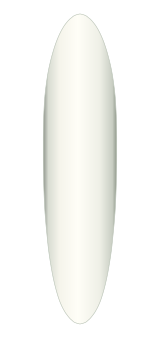
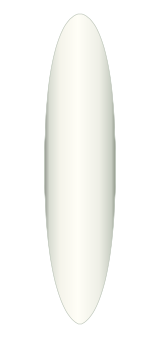
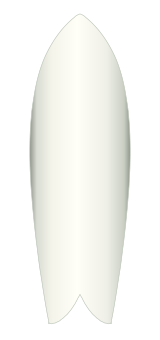
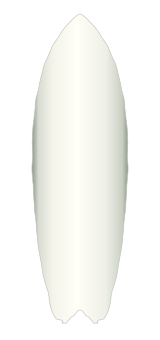
Compare plain renderings traced from real board references, identified below. Equal display height makes the outlines easier to compare; actual board lengths vary. These are reference examples, not family averages, size prescriptions or shaping templates. The finish is illustrative. Designers blend these families and use many different tails.
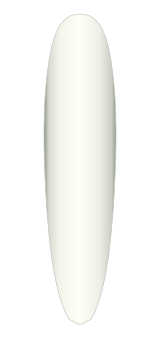
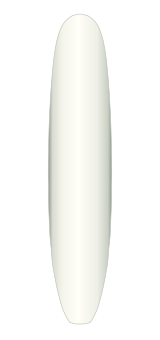
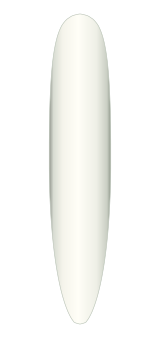
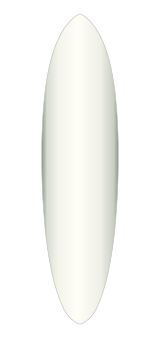
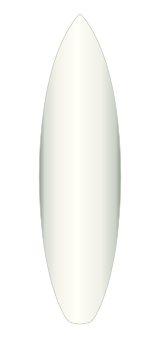
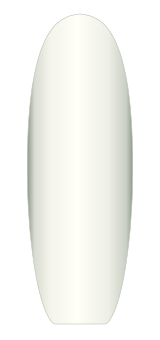
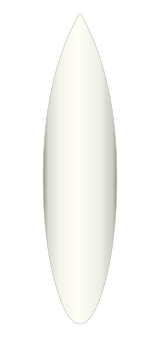
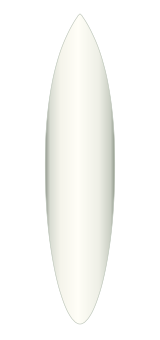
Open the full board-shape comparison graphic ↗
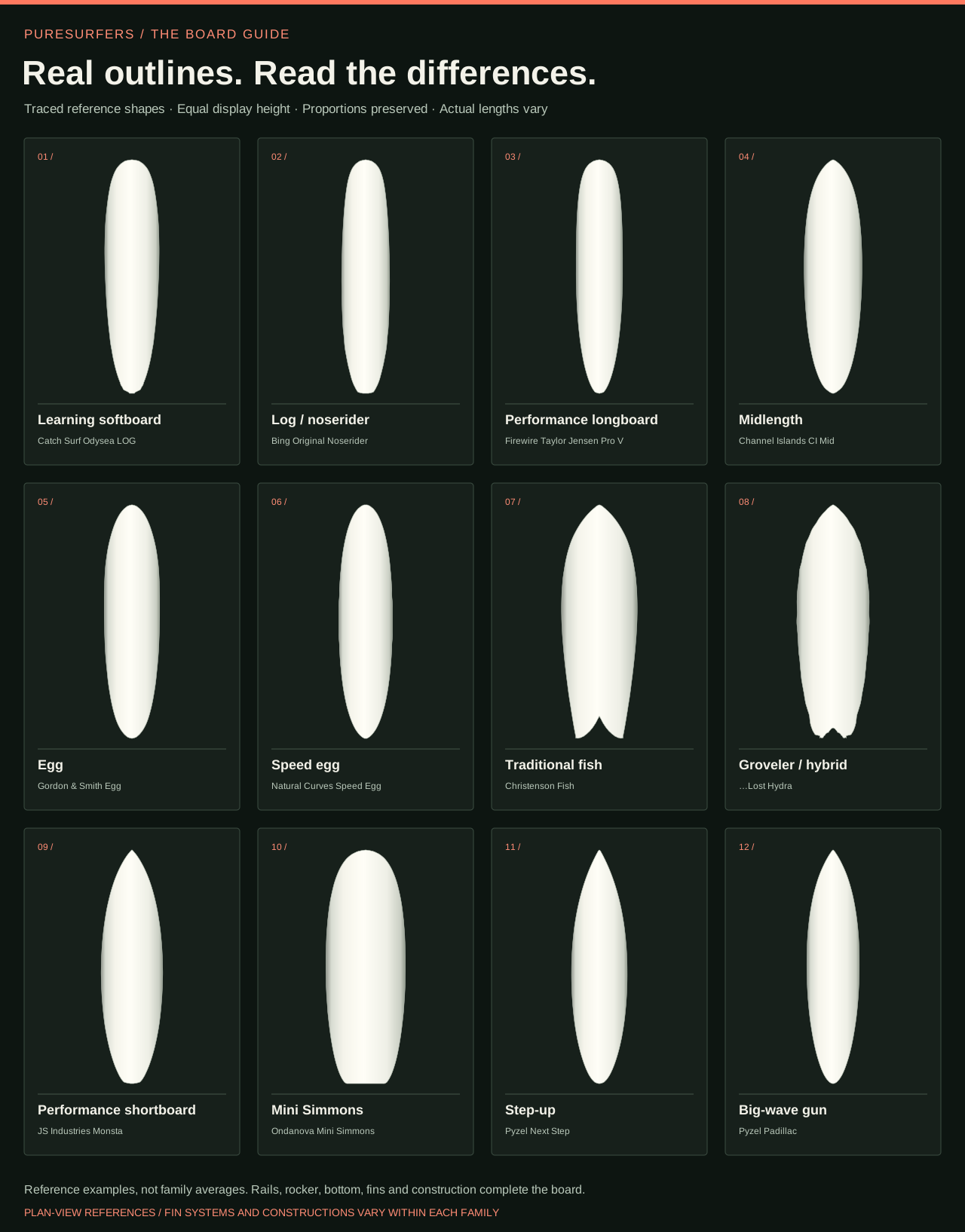
Single, twin, thruster, quad, twinzer and Bonzer describe fin or coordinated bottom-and-fin systems, not one unique outline. A board’s rocker, rails and bottom are also invisible in this top view.
06 /
Know what the different board families are for.
Names overlap. “Midlength” mostly describes a size category; “egg” describes an outline and design approach; “quad” describes a fin arrangement. A board can be a midlength egg with a quad setup. Shop by the whole design and its intended use.
| Board family | Where it often excels | First-board perspective |
|---|---|---|
| Learning softboard | Gentle whitewater and forgiving small waves; repeated attempts. | Usually the most useful place to start. Choose a learning model, not a miniature performance soft-top. |
| Funboard / forgiving egg | A broad, rounded platform between a shortboard and longboard. | Can suit progressing learners; enough length and volume still matter. |
| Midlength | Glide, drawn-out turns and early entry; a huge range of designs. | Some are forgiving, others narrow and demanding. The label alone is not a beginner rating. |
| Traditional log / noserider | Trim, cross-stepping and nose riding in suitable waves. | Long does not necessarily mean easy: weight, rounded rails and control need consideration. |
| Performance longboard | Longboard wave catching with a more turn-focused design. | A possible progression route; do not assume every highly rockered performance model is an ideal first board. |
| Fish | Flow and speed, often in softer or running waves. | Its width can be misleading: a short fish is usually a progression choice, not a substitute for a learning board. |
| Groveler / small-wave hybrid | Compact boards designed to work in weaker surf. | Still expects independent wave catching, balance and speed management. |
| High-performance shortboard | Responsive, precise surfing in waves that suit its design. | Usually gives a new surfer too few successful repetitions. |
| Mini Simmons | Short, very broad planing platform and a distinctive trim-and-turn feel. | An interesting experienced-surfer option; short and wide does not equal stable learning longboard. |
| Step-up / gun | More demanding, powerful surf; increasingly specialized as size rises. | Equipment for established skills and conditions, not a way to skip the learning process. |
Want the detailed differences between a speed egg, fish, log, Bonzer and twinzer? The advanced board guide separates outlines, bottoms, fin layouts and materials.
07 /
Fins and construction, without the alphabet soup.
A single fin uses one main fin. A twin uses two. A thruster has two side fins and a center fin of broadly comparable scale; a quad has four fins in paired side arrangements. A 2+1 typically combines a larger center fin with smaller sidebites. These layouts can appear on several board families.
Five fin boxes commonly offer a choice between a thruster and a quad; they usually do not mean you should install five ordinary fins at once. Specialized systems exist, so follow the board’s intended setup. For a first board, compatible, securely fitted, appropriate fins matter more than collecting alternatives. Our fin selection guide explains sizing and box compatibility in depth.
A “glass board” is usually a foam core covered with fiberglass cloth and cured resin, not a slab of window glass. The skin is stiff and relatively thin: knocks, fins, rocks and excessive pressure can crack it. A ding that reaches the core should be repaired before continued use.
PU and EPS describe foam; polyester and epoxy describe resin. PU can be laminated with either suitable polyester or epoxy. EPS needs a compatible epoxy system; ordinary polyester resin can damage EPS foam.[5] Ask what your board is actually made of and use the maker’s repair instructions. “Epoxy” alone does not tell you its weight, durability or riding feel.
You do not need carbon fiber, elaborate woodwork or a professional’s lightest glass job to learn. A sound, appropriate board that you can afford to maintain is more useful than an exotic construction in the wrong shape.
08 /
Glassing: the lightest board can be the expensive one.
When you pick up a very light board, it is easy to mistake low weight for higher quality. A light performance build can be a deliberate, useful choice—but the tradeoff may be faster deck wear, easier impact damage and more repairs. For a first glass board or an everyday purchase on a budget, durability belongs in the buying decision from the start.
The glassing schedule describes the fiberglass layers on the deck and bottom, plus their coverage and reinforcement. In conventional cloth labels, “4 oz” or “6 oz” refers to the dry fabric’s weight per square yard, not the weight of the board or a direct measurement of its skin thickness.[7] A board using 4 oz cloth can have one layer, several layers, or additional patches. Those are different builds.
Watch for Pro, Team, Team Light, Competition, Ultra Light or Ultralight descriptions. They are prompts to ask questions, not standardized specifications. Superstix explicitly describes its lightest team layup as the least durable option; its more reinforced schedules prioritize longer service.[8] A performance model name alone does not reveal how that particular board was glassed.
For a conventional hard board, ask the builder about options such as a 6 oz + 4 oz deck and a suitable bottom schedule. Greenlight gives a 6+4 deck / 4 bottom as one practical shortboard example.[9] This is a discussion starter, not a universal prescription: foam density, cloth type, reinforcement, resin and workmanship all matter.
Small pressure dents underfoot can develop without the skin cracking; that does not make every dent a leak. Open cracks, separated laminate, movement around fittings or a crease across the board deserve proper assessment. Do not squeeze the deck to “test” its glassing. Ask for the construction record and inspect it in good light.
For young surfers and parents especially, compare the price of keeping the board usable as well as the purchase price. A sponsored surfer’s equipment priorities need not be yours. The advanced guide explains 4+4/4, deck patches and stronger everyday options in detail.
09 /
Your first glass board is a great candidate for buying used.
Craigslist, Facebook Marketplace and surf-shop consignment racks can be useful places to find a first hard board. You will probably put some marks on it while learning. A sensible used purchase can make that less expensive and less emotionally painful.
Start with a clear brief: family, broad size range, your weight and current skills, local wave type, total budget. Otherwise every cheap shortboard starts to look like a bargain. A board that delays your progress is not good value just because the sticker price is low.
Ask for the dimensions and stated volume if known, core/resin construction, actual glassing schedule, repair history, included fins, and clear photographs of the deck, bottom, rails and fin boxes. A former team rider’s board may have a lighter layup than the stock version; ask rather than assuming. An older hand shape may have no recorded liters. That does not make it a bad board; evaluate its design and fit rather than inventing an exact volume from three dimensions.
Inspect it dry, in good light.
- Look over the entire skin. Check both rails, nose, tail, bottom and the deck around your standing area. With permission, ask for dirty wax to be removed where it hides damage.
- Separate dents from open damage. Ordinary pressure depressions are not automatically leaks. Cracks, exposed foam and broken glass need closer assessment. A line that crosses a large part of the board can indicate a buckle or significant repair.
- Check the hardware. Look around fin boxes and the leash plug for cracks or movement. Do not force the fins to test strength. Confirm the boxes and screw threads work and compatible fins are available.
- Look for delamination. A separated skin, unusual bubble or locally soft area deserves investigation. Use gentle touch; do not squeeze hard or tap with an object. Ask a repairer if unsure.
- Question suspicious areas. Staining, extra weight or a rough repair can justify more questions, but no single clue proves water damage. A well-executed repair can be perfectly serviceable.
- Sight its shape. Look down the board for an unexplained twist or a poorly aligned repair. Some designs are intentionally asymmetric; ask before declaring an intentional feature a defect.
Repair guidance distinguishes cosmetic wear from damage that can admit water; the uncertainty and cost of a repair matter more than whether the board looks pristine.[6] Obtain a repair estimate before committing to a project board. Do not put a potentially leaking board in the water as a test.
Add the cost of fins, leash, necessary repairs, transport and a protective bag to the price. Compare that total with a sound consignment board. A local shop may cost more but can help with fit, repair assessment and compatible parts. Arrange private sales in an appropriate public place and inspect before paying.
10 /
Pick it up. Your hands will teach your eyes.
Board feel is learned through comparison. An experienced surfer may pick up a board and immediately recognize a rail, balance or distribution of foam they like. You can begin building that vocabulary before you know all the shaping terms.
Ask permission to handle it. Support the board securely and keep its tail and fins off the floor. Gently grip one rail with your thumb on the bottom and your fingers over the deck. Feel how much material sits between them, how rounded the outer edge is and how the bottom turns into the side. Move your hand toward the nose and then toward the tail. The profile usually changes.
Now compare it with a rental you liked or another suitable board. Is the center thick but the rail relatively fine? Is the deck broad and flat, or crowned? Can you comfortably carry it? Does a wider board make reaching around the rail awkward? These questions connect specifications to your own body.
Do not squeeze hard, deliberately bend the board or press your fingernails into it. Holding a board is an inspection, not a strength test. The feel in your hand can reveal shape and balance; it cannot prove how the board will surf. A rental, demo or a few waves on a friend’s suitable board is much more informative.
11 /
When should you move to a smaller board?
Move because you can name a useful change, not because a calendar says you have been surfing long enough. Can you consistently position yourself, paddle into unbroken waves, stand with control and choose a direction? Can you turn and stop without repeatedly losing control near others? Are you getting enough rides to know what the current board does?
A shorter board may allow a different turning approach, but it also changes paddling, balance and timing. If every session becomes two rushed takeoffs and thirty missed waves, you may have made the step too large. Keep the bigger board and compare on suitable days.
Do not choose your first board around whether you can duck-dive it. Learning to catch and ride waves comes first. Longboards and larger foam boards use different management techniques, and a lesson can teach those in suitable conditions. A sinkable board does not automatically make difficult surf appropriate.
Progress is not a contest to ride the fewest liters. You may enjoy a log in small surf, an egg on a running point and a more responsive board on a steeper day. Those are tools for different experiences, not ranks.
12 /
Match the board to your real sessions.
Describe the waves you usually get, not only the best day you remember. Are they soft and slow, steep and quick, long and running, or short beachbreak peaks? Is the paddle easy or tiring? Do you surf twice a week or twice a month? Which board gives you useful rides in those conditions?
Use PureSurfers to compare swell direction and period, wind, tide, spot exposure and the forecast range. Then check current observations and local conditions. A numeric height alone cannot tell you whether a wave is a gentle learning shoulder or a fast, shallow closeout. Our guide to using the forecast explains how these pieces fit together.
For first sessions, prioritize a suitable learning area and instruction. Board selection is only one part of the day. A bigger board does not neutralize currents, crowded takeoff zones or a shallow bottom; a smaller board does not make those problems disappear either.
Once you have a little experience, keep a small session note: board, approximate conditions, waves caught, what felt easy and what felt awkward. After several sessions, a pattern is worth more than one memorable wipeout or one lucky ride.
13 /
Leave the shop with a plan, not just a board.
- Fit: a board matched to your present ability, body and normal waves; ideally one you have tried.
- Condition: watertight skin, sound fin boxes and leash attachment, understood repairs.
- Accessories: compatible fins, a suitable leash fitted correctly, and the correct traction or wax for that board. Some soft decks require particular treatment; check before waxing.
- Handling: a practical carrying method, safe transport and storage out of heat.
- Learning: a suitable location, coaching where needed and a realistic next skill to practice.
- Budget: allow for repairs and lessons, not just the board price.
Before buying, tell the seller: “This is my weight, this is what I can consistently do, these are my normal waves, and this is what I want to improve.” A good recommendation should answer that brief in ordinary language.
Next: calculate a useful starting range or learn to read the shape of a board.
14 /
Keep the board in good shape.
Choosing the right board is only the beginning. Heat, overtight roof straps and a hurried turn through a doorway can undo a good purchase. Our surfboard care and longevity guide covers board socks and bags, hot cars, everyday handling, dry storage, damage checks and construction-compatible repairs.
REFERENCE /
Sources & further reading.
Original PureSurfers guidance, informed by shapers, manufacturers and practical equipment references. Design tendencies depend on the complete board, surfer and wave. Product examples describe their makers’ stated intentions; they are not claims of a PureSurfers product test.
- Catch Surf — Hi-Perf Safety Edge Tri-Fin
An example of a rigid fin core with a softer edge; softboard fins are not all the same.
- Catch Surf — Care & Handling Guide
Softboard care, heat, damage and model-specific handling.
- Surf Simply — Volume to Weight Ratios Updated
Volume as one sizing input, rather than a substitute for shape or skill.
- Global Surf Industries — Surfboard Finder
A manufacturer/distributor sizing example. PureSurfers ranges are our own broad editorial heuristics.
- Greenlight — EPS and PU Foam
Core and resin distinctions, including EPS repair compatibility.
- Cleanline Surf — Surfboard Repair Guide
Practical distinctions between wear, cracks and repair needs.
- Jarvis Boards — 4 oz E-glass Cloth
The ounce rating describes cloth weight per square yard.
- Superstix — Glassing Options
Published team, ultralight and more reinforced layups; labels are specific to this builder.
- Greenlight — How Much Fiberglass Do I Need?
A 6+4 deck / 4 bottom shortboard example, not a requirement for every construction.
Sources checked October 2026. No paid placements or affiliate links in these guides.