START WITH THE FEELING /
What kind of surfing do you want to do?
You do not have to know a board’s name to know what appeals to you. Start with the ride you imagine, then compare the shapes that can support it. These are tendencies within broad families—not rules about what talented surfers can or cannot do.
| I want to… | Compare | Understand the compromise |
|---|---|---|
| Glide and cruise | Midlength / egg, traditional log, performance longboard; fish for compact flow. | A fish can cruise and carry speed, but it does not have a log’s paddle length or the same relaxed trim. A highly rockered performance shortboard usually asks for more active input. |
| Go fast and flow | Fish, egg, suitable small-wave hybrid. | Easy speed depends on wave and design. A full, low-rockered fish may feel less comfortable in a tight, steep pocket than a more refined performance shape. |
| Carve hard and throw spray | Fish, performance shortboard, turning-focused midlength or performance longboard. | Carving is not owned by one family. Speed, technique, rail volume, fins and the section matter. A wider fish and a refined shortboard ask for different lines and control. |
| Hit the lip and work toward airs | Performance shortboard; a suitable groveler / hybrid for weaker waves. | Compact response and release give up some easy glide and wave-catching support. A board cannot supply the approach speed, timing or skill by itself. |
| Cross-step and ride the nose | Traditional log / dedicated noserider; performance longboard for more turning range. | Length alone does not make a noserider. The full design, fin, pocket and positioning matter. Chasing shortboard-style aerial response on the same board is a substantial compromise. |
| Catch more waves | Broad learning softboard, appropriate longboard or forgiving midlength. | Useful length and platform can matter more than squeezing extra liters into a compact board. Choose something you can carry and control. |
Keep the dream; choose the right next board. First-session surfers still receive a learning-board range. If you want airs, the result explains that path and shows the relevant future families, while helping you choose something that lets you practice now. A love of logging is equally a destination, not a stage you must grow out of.
The advisor orders comparisons using your main goal first and an optional second priority, then considers weak versus powerful waves. It treats ability separately when selecting the board to size. Family matches are editorial judgments, not a simulation or a promise of performance. Fin choice and the actual model can change the feel substantially.
READ THE OUTLINE /
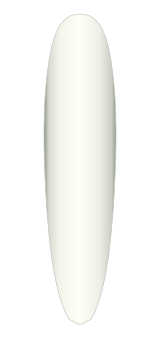
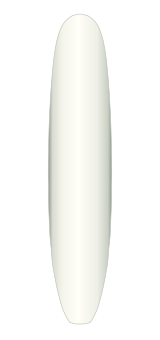
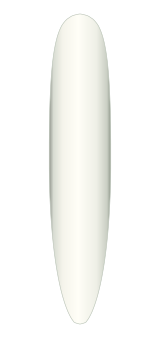
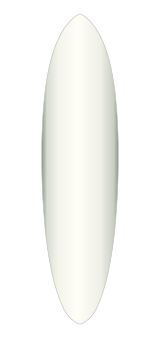
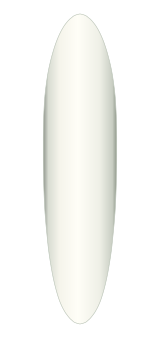
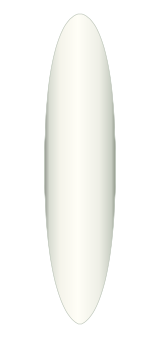
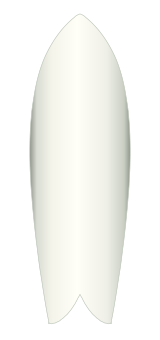
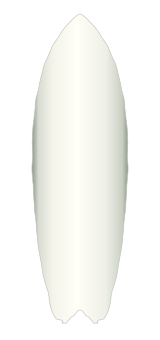
Typical surfboard shapes, side by side.
Plain renderings traced from real board references, with the models identified below. All are shown at equal height to compare outlines; actual board lengths vary. These are individual examples, not family averages or size recommendations. Rocker, rails, bottom shape and construction complete the design.
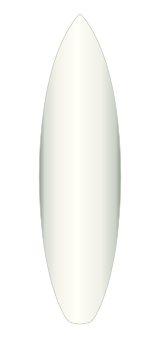
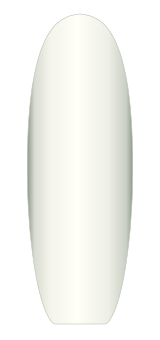
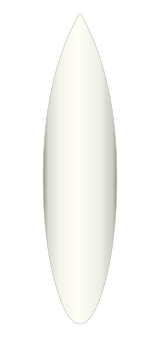
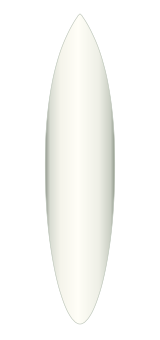
Open the full board-shape comparison graphic ↗
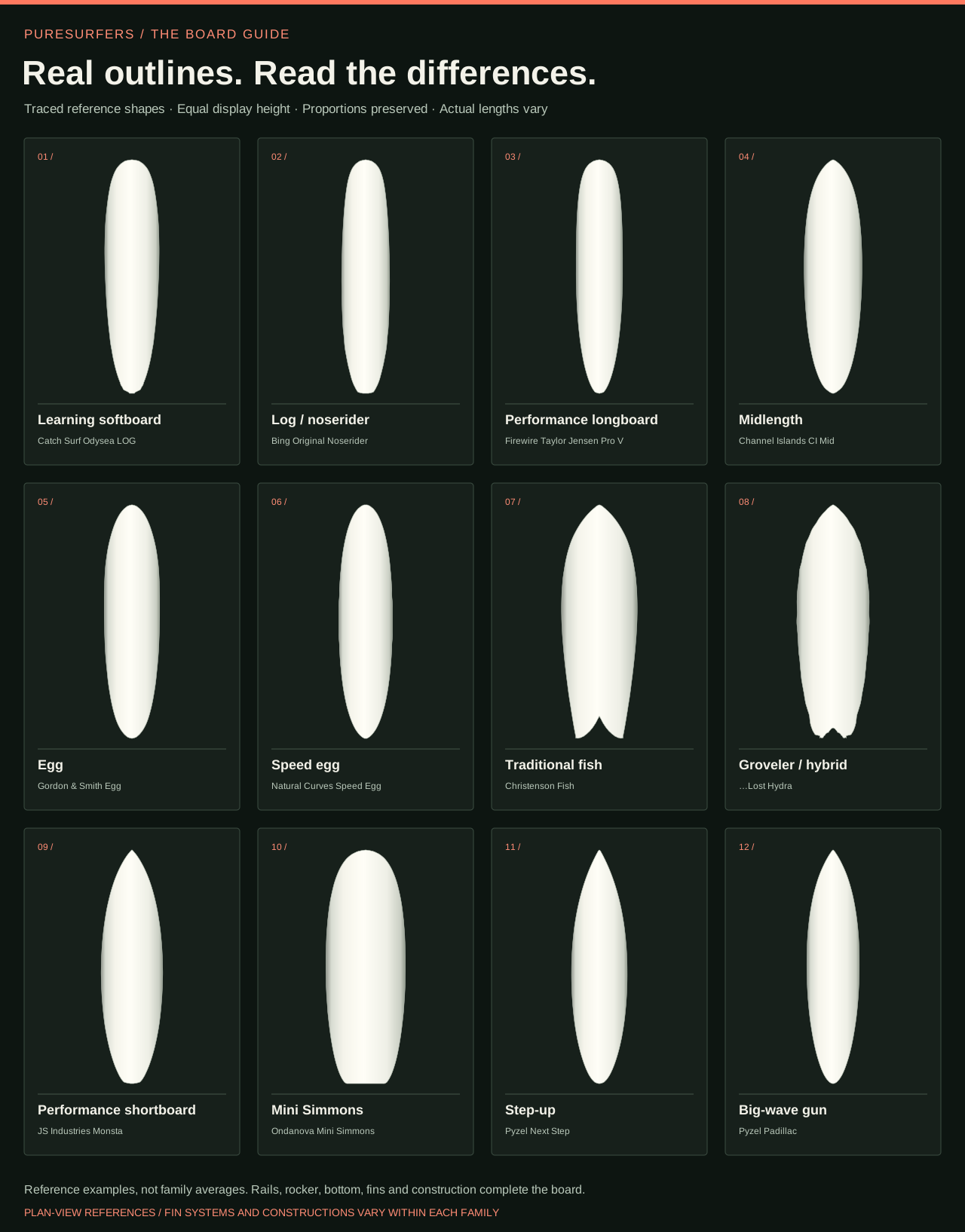
Fin layouts are a separate choice: twins, thrusters, quads, twinzers and Bonzers can use several different outlines. The advisor does not size the specialist step-up or gun shown here.
01 /
How the surfboard volume calculator works.
These are PureSurfers editorial shopping heuristics, not a scientifically validated fit model or a manufacturer’s recommendation. The formula multiplies body weight in kilograms by a liters-per-kilogram range. It keeps the higher starting endpoints from your skill band and your board-family band, then applies the stated adjustments.
| Current experience | Starting L/kg | Interpretation |
|---|---|---|
| First sessions | 0.95–1.15 | A long, broad learning shape. A short high-volume board is not equivalent. |
| Improving | 0.70–0.90 | Keep useful wave-catching support while developing independent riding. |
| Intermediate | 0.50–0.65 | Shape and goals become increasingly important; mids and logs use higher bands. |
| Advanced | 0.34–0.44 | A compact-board baseline, not a requirement to ride low volume. |
| Family | Starting L/kg |
|---|---|
| Learning softboard | 0.95–1.15 |
| Midlength / egg | 0.65–0.85 |
| Longboard / log / performance longboard | 0.80–1.05 |
| Fish | 0.40–0.52 |
| Groveler / hybrid | 0.42–0.55 |
| Performance shortboard | 0.34–0.44 |
Limited current paddle endurance adds 0.05 L/kg to each endpoint. Mostly weak waves add 0.04 L/kg for fish, groveler and performance-shortboard recommendations. These adjustments are broad editorial allowances, not measured physiological effects. Endpoints round outward to whole liters.
First-session users receive a learning-board recommendation even when they select a compact performance style. Improving surfers selecting fish, groveler or performance shapes receive a forgiving midlength starting point, with the reason shown. In the board-family path, choosing “help me” suggests a learning board for first sessions, a midlength for improving/intermediate surfers, and an everyday shortboard as an advanced comparison—not a judgment about what experienced surfers should enjoy.
Worked example: an 80 kg first-session surfer with regular paddle endurance receives 80 × 0.95–1.15 = 76–92 L, paired with an approximately 8′0″–9′0″ learning-board range. An 80 kg advanced surfer choosing a midlength starts at 52–68 L, because the family band takes priority over the compact-board skill baseline.
02 /
How height and weight affect length.
Learning-board length bands follow weight: below 60 kg, 7′6″–8′6″; 60 to under 85 kg, 8′0″–9′0″; 85 to under 110 kg, 8′6″–9′6″; and 110–130 kg, 9′0″–10′0″. These describe broad stock-board families, not a promise that every length is available at every volume.
Midlength bands run 6′8″–7′8″ below 65 kg, 7′0″–8′0″ from 65 to under 90 kg, and 7′4″–8′4″ at 90 kg and above. Longboards start at 9′0″–10′0″ below 90 kg and 9′2″–10′4″ above. For these families, height over 190 cm adds two inches to the upper end to leave more stance room.
Compact-board lengths use height as a starting reference: fish from six inches shorter to two inches taller; grovelers from four inches shorter to two inches taller; performance shortboards from two inches shorter to four inches taller. Above 95 kg the finder adds two inches to those endpoints. A lower floor of 4′10″ and an upper-end floor of 5′4″ prevent extremely short compact suggestions. These are intentionally broad conventions: the designer’s sizing for that exact model takes priority.
Reach, shoulder mobility, stance, rail volume and carrying comfort require an in-person check. A stock board outside our range may be a better fit. The result is a conversation starter, not a reason to reject a board that demonstrably works for you.
02B /
How wide and thick should your surfboard be?
Read a board’s dimensions as length × width × thickness, followed by volume. Width normally means the widest point of the outline; thickness means the maximum deck-to-bottom measurement. Neither tells you the width twelve inches from the nose or tail, how wide the tail block is, or how much foam remains in the rails.
A broader board generally gives you more platform, but nose and tail area matter too. A broad fish and a narrower performance shortboard can feel very different at similar volume. More width can also make a board awkward to reach around or control. Check the fit with your own body, particularly on a learning board.
Thickness is not the same as rail thickness. A domed deck can carry foam near the center while keeping the rails refined; a flatter deck can leave more foam toward the edges. Pick the board up and wrap your hand around the rail—thumb underneath, fingers over the deck. Move along it toward the nose and tail. Compare with a board you know. That feel reveals something a center-thickness number cannot.
Our suggestions use different starting bands for each board family. The table below shows the 80 kg baseline before extra support adjustments. It is a reference for understanding the method; your result above adjusts for your weight and selected experience, paddling and waves.
| Family | Maximum width | Maximum thickness |
|---|---|---|
| Broad learning softboard | 22 1/2–24 | 3–3 1/2 |
| Forgiving midlength / egg | 21 1/2–23 | 2 3/4–3 1/4 |
| General longboard | 22–23 1/2 | 2 3/4–3 3/8 |
| Traditional log / noserider | 22 1/2–23 1/2 | 2 7/8–3 3/8 |
| Performance longboard | 22–23 | 2 5/8–3 1/8 |
| Fish | 20 1/2–22 | 2 3/8–2 7/8 |
| Groveler / hybrid | 20 1/2–22 1/2 | 2 3/8–2 7/8 |
| Everyday performance shortboard | 18 3/4–20 | 2 3/8–2 3/4 |
These are broad shopping bands, not manufacturer averages, measured performance ratings or a validated fitting formula. They do not estimate your shoulder span, flexibility or stance from your height. A specialist model, a shaper’s fit or a board you already enjoy may sit outside them.
Exactly how width and thickness are adjusted
Relative to the 80 kg baseline, each kilogram adds or subtracts 0.02 inch of width and 0.00625 inch of thickness at both ends of the band. The weight shift is capped at −0.75 to +1 inch for width and −0.25 to +0.3125 inch for thickness.
The calculator also compares your final L/kg band with your family’s starting L/kg band. If its midpoint is higher, that difference is multiplied by 2.5 for an extra width allowance, capped at 0.5 inch, and by 1.25 for an extra thickness allowance, capped at 0.25 inch. This lets skill and the existing paddle/weak-wave allowances influence the dimensions without endlessly widening or thickening a board. These are editorial adjustments, not physiological measurements.
Width rounds outward to 1/8 inch and thickness to 1/16 inch. Centimeters are conversions of those same ranges, rounded to one decimal place. The fractions make it easier to compare the markings on actual boards; they do not imply that we know your ideal dimensions that precisely.
Do not force the liters. A light adult’s full-length learning board or log may naturally carry more foam than the weight-based volume band. Conversely, a short board with a high volume target may need a fuller or longer model. Do not thin a good learning platform, or inflate every rail, simply to satisfy the calculator. Your result flags those common tensions; it does not certify that every combination exists.
Multiply length × width × thickness and you get a surrounding box, not the board’s volume. Outline, rocker, deck, bottom and foil remove very different amounts of that box. Use the maker’s stated liters and examine the whole shape.
03 /
Beginner surfboard volume chart.
For adult first sessions on a broad learning shape, before paddle-endurance adjustments:
| Weight | Volume |
|---|---|
| 50 kg / 110 lb | 47–58 L |
| 60 kg / 132 lb | 57–69 L |
| 70 kg / 154 lb | 66–81 L |
| 80 kg / 176 lb | 76–92 L |
| 90 kg / 198 lb | 85–104 L |
| 100 kg / 220 lb | 95–115 L |
| 110 kg / 243 lb | 104–127 L |
Many surf-school boards deliberately carry generous volume. A little more than the table is not automatically a problem. A rental you control comfortably, or a coach’s fitting based on watching you, is stronger evidence than this calculation.
04 /
Fit the construction to your budget, too.
Even the right length, width, thickness and liters cannot tell you how long a board will stay in good condition. Before buying a hard board, ask for its actual deck and bottom glassing schedule: cloth weight, number of layers, full coverage versus patches, and the intended durability.
“Pro,” “Team Light” and “Ultralight” are reasons to investigate the build. They do not mean the same thing across manufacturers. A single 4 oz deck layer and two full 4 oz layers are different constructions, even though both use 4 oz cloth. For an everyday board, do not automatically choose the lightest option.
Understand glassing schedules, pressure dents and longevity ↗
05 /
Common board-sizing questions.
Can two boards with the same dimensions feel different?
Very different. Maximum length, width and thickness do not describe the outline between those points, rail volume, rocker, bottom contours, fins, flex or construction. Even identical liters can be distributed differently. Use the numbers to narrow a search, then compare actual shapes and demos.
Is volume more important than length?
Neither is a complete fit. Volume helps compare flotation relative to rider weight. Length, width, outline and foam distribution determine the platform and change paddling and handling. For a beginner, replacing useful length with thickness in a compact shape can preserve liters while making learning harder.
Can an experienced surfer ride a high-volume board?
Absolutely. Logs, midlengths, eggs and many compact designs provide excellent surfing without chasing minimum volume. Choose for your waves and desired feeling. Lower liters are not a badge of skill.
Why does my shaper recommend something outside this range?
Your shaper may know the model, your body, your technique and local waves far better than this tool can. Ask what problem their recommendation solves. A proven board and a well-informed fitting should outweigh a generic calculator.
Can I use this to choose a board for a child?
No. This is an adult shopping aid with stated measurement limits. Children’s reach, strength, development and ability to control the board need individual assessment. A qualified instructor can fit a learning board in appropriate conditions.
Should I go smaller so I can duck-dive?
Do not sacrifice a useful learning platform just to sink it. Choose appropriate waves and learn the control technique suited to your board. A smaller board does not replace ocean skills or make powerful surf suitable.
Does this recommend a particular brand or model?
No. It suggests families and broad dimensions, with no affiliate ranking. Compare real boards, check their condition and construction, and try suitable rentals or demos before spending.
REFERENCE /
Where the approach comes from.
Surf Simply’s discussion of volume and rider weight explains why volume can inform a fit without replacing design. Global Surf Industries’ board finder provides a useful beginner example. Our coefficients, family rules and length bands are PureSurfers editorial choices; neither organization has endorsed or validated this calculator.
For contrasting design intentions, see Bing’s Original Noserider and JS’s Monsta performance shortboard. Those are maker descriptions, not our product tests. The advanced guide provides broader family and design references.
To compare real dimension sets, see Catch Surf’s LOG dimensions, Channel Islands’ CI Mid size table, …Lost’s Hydra dimensions, Bing’s Original Noserider table and JS’s Monsta sizing examples. These show different design proportions; our broad width/thickness bands and adjustments are our own editorial choices, not a statistical average or an endorsement by those makers.
Advisor method version 1.2 · October 2026. Width and thickness now accompany length and volume, including suitable alternate families. The existing length, volume and progression rules are retained. We show the assumptions so you can question them. Measurements stay in this page’s memory until you leave or refresh; this tool does not save them or send them to a service.